● BLOG

Community
In the NEW WORK CHAT Podcast (#432) with Gabriel Rath, academy4.ai founder Marcel Pesch analyses the three most important AI skills for executives in 2026. The article highlights why coding is becoming secondary, why "Human in the Loop" is a genuine survival strategy, and how physical performance forms the foundation for sustainable AI leadership.
Read more →

Real-World Experience
In the German hospitality industry, an acute shortage of skilled workers and radical AI automation are colliding: while humanoid robots handle check-ins, scanner systems like 'Billie' monitor the work of the cleaning staff. The article highlights the tension between economic necessity and the ethical questions of human leadership in the AI era.
Read more →

AI Trends
Globally, an estimated $5.5 trillion in productivity is lost because companies purchase expensive AI licences, but their employees do not know how to use the systems. The article analyses the glaring training problem in the corporate sector and shows how companies can bridge the gap between tool adoption and genuine AI competence.
Read more →

Real-World Experience
The use of autonomous AI agents has exploded by 327% in just four months. While agile mid-sized companies are radically automating their workflows, a look at the 1,000-page training catalogue of public administration reveals a dangerous knowledge gap. This article analyses the paradigm shift from passive chatbot to active agent team.
Read more →

Real-World Experience
Since August 2, 2026, the strict transparency and governance rules of the EU AI Act have been in force, yet almost the entire German economy is unprepared. This article analyzes the legal requirements of Article 50, warns of sensitive fines based on global turnover, and shows how companies can now set up their processes in a legally compliant manner.
Read more →

AI Trends
More and more companies are cutting junior positions and trainee programs as AI systems take over initial routine tasks. The article analyzes the dangerous gap in the job market and explains why the elimination of entry-level positions destroys the foundation of future leaders – and how we must counteract this.
Read more →

Real-World Experience
academy4.ai has been officially recognized as a "TOP COMPANY 2026" by the Federal Association of Medium-Sized Enterprises in Germany (BVMID). This article goes behind the scenes of the multi-week independent expert evaluation and shows how an empty Google Doc was transformed into an award-winning pioneer for practical AI training in medium-sized businesses.
Read more →

AI Trends
Over a decade ago, Angela Merkel famously referred to the internet as "uncharted territory" (Neuland) – today, German boardrooms are facing the exact same knowledge dilemma when it comes to Artificial Intelligence. This article highlights the conversation with Dr. Ralf Lauterbach (Deutsche Digitale Beiräte e.V.) and explains why active AI competence is the fundamental prerequisite for future-proof leadership.
Read more →

AI Trends
The reports from OpenAI and Anthropic about AI models breaking out of their isolated test environments and infiltrating real corporate networks mark a turning point in the tech world. The article analyzes the dangers of autonomous agent infrastructures and explains why the EU AI Act, which came into effect on August 2, as well as comprehensive AI literacy across the team, are the only real shields.
Read more →

Real-World Experience
A recent study by the TH Nuremberg dispels the myth that Generation Z is automatically AI-savvy. The article analyzes the skills gap between intuitive use and strategic applicability, and introduces the new collaboration between academy4.ai and Anastasia Barner, which brings AI competence to Gen Z on an equal footing.
Read more →

AI Trends
A comprehensive evaluation of 2.4 million job advertisements by the HR service provider Randstad proves a drastic salary premium for AI skills. The article analyzes the hard figures of the labor market and explains why building AI skills is not only a salary booster for employees, but also the solution for employers in the fight against the shortage of skilled workers.
Read more →

AI Trends
A recent study by Strand Partners, commissioned by AWS, reveals the glaring AI dilemma facing the German economy: although 63% of companies are already using AI tools, a measly 15% are deploying them transformatively. The article analyzes the difference between superficial efficiency and genuine value creation, showing how medium-sized businesses can make the leap from playing around to Formula 1.
Read more →
Real-World Experience
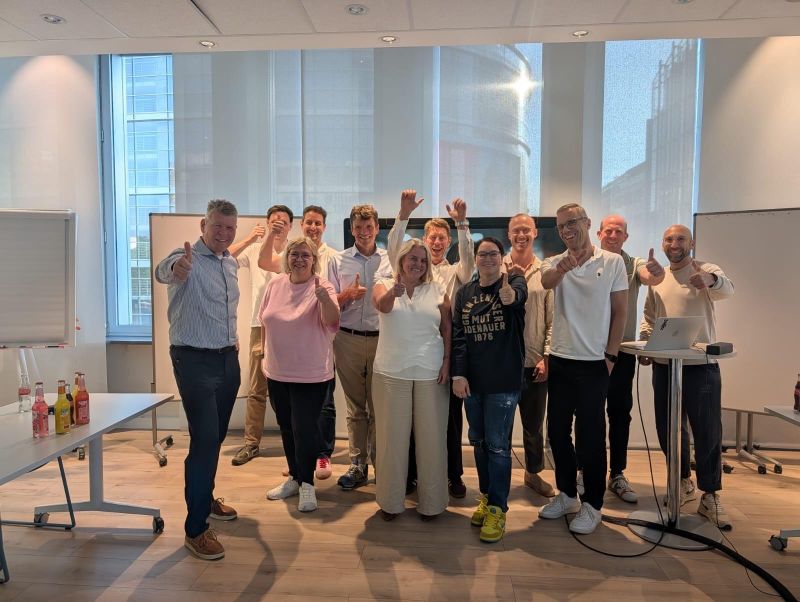
In the joint AI hackathon with Deutsche Telekom, alumni, medium-sized businesses, and corporate decision-makers built three complete companies from the initial idea to the first warm lead in just four hours. The article highlights the radical acceleration of product validation through modern AI processes and provides insights into the next free event in Düsseldorf.
Read more →

AI Trends
A recent study by Zurich Insurance reveals a dangerous paradox of automation: while companies scale their processes with AI, they lose customers due to a lack of empathy. The article highlights how AI can be used correctly – not to replace human interaction, but to create real space for empathy and customer relationships.
Read more →

AI Trends
In the frenzy of permanent self-optimization and AI-driven efficiency, many founders and executives are at risk of burning out in 2026. This article sheds light on the neurobiological background of constant digital stimulation and shows why genuine mental downtime in nature remains the irreplaceable prerequisite for true strategic creativity.
Read more →

Events
The live experiences from the Eurominds Summit in Hamburg reveal a shocking digital divide in the German economy. The article analyzes the three most important key learnings of the event and explains why building AI competence is not a technological trend, but the fundamental survival insurance for Germany as a business location.
Read more →

AI Trends
A sudden decree from Washington highlights European companies' dangerous dependency on US-based AI platforms. The article sheds light on the need for technological sovereignty and explains how academy4.ai establishes a crisis-proof Plan B by combining German, GDPR-compliant solutions like Langdock and n8n.
Read more →

AI Trends
A recent study by researchers Wang and Zhang (2026) shows that the way we use Artificial Intelligence heavily influences our critical thinking. The article analyzes the phenomenon of "cognitive offloading" and explains why the transition to "Homo Agenticus" – the collaborative leadership of AI workers – is the most important skill in the modern working world.
Read more →
Events
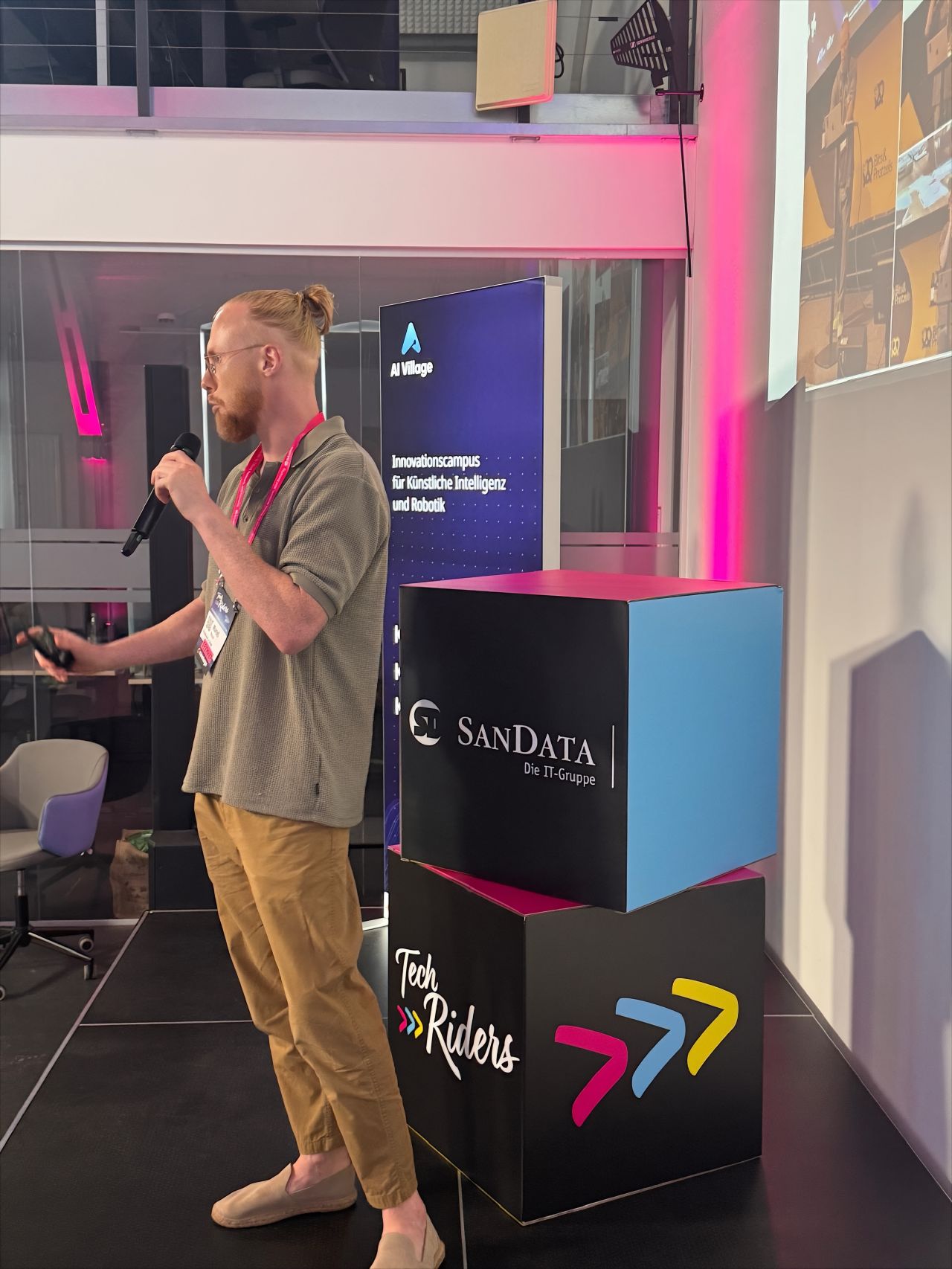
The TechRiders Festival at the AI Village Hürth clearly demonstrated how pressing the regulatory requirements of the new EU AI Act are for small and medium-sized enterprises (SMEs). The article highlights the strict requirements of the EU AI Act and explains why the often overlooked Article 4 on AI literacy for employees is now a legal obligation for every company.
Read more →

Real-World Experience
When a single continuing education participant builds a complete business app in just five hours instead of six months using modern AI coding tools, the traditional rules of the IT industry are officially pulverized. This article highlights the radical shift from manual programmer to strategic software architect and explains the current tremors on the international financial markets.
Read more →
Events
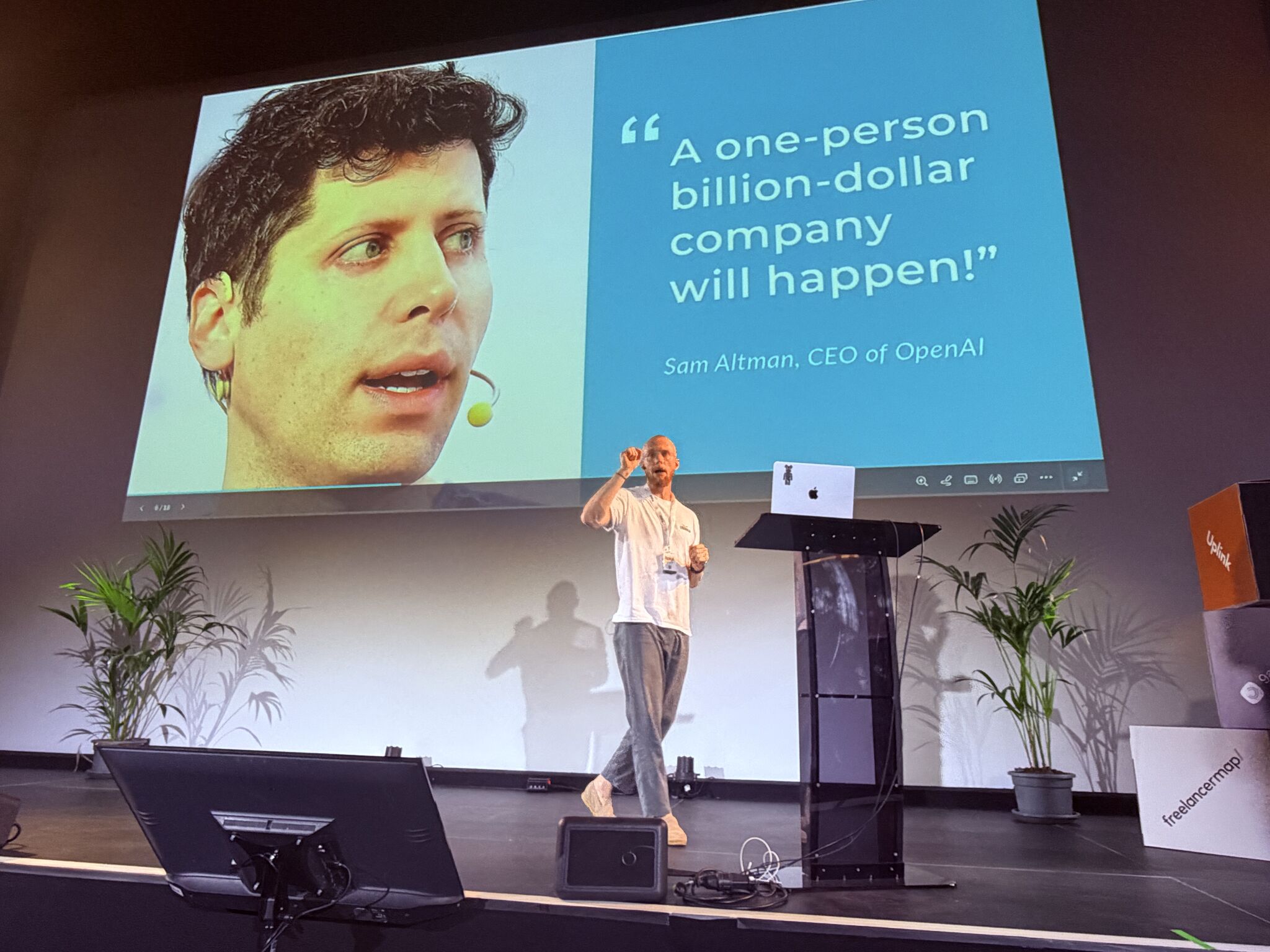
Directly from Freelance Unlocked in Berlin, this article dispels the persistent myth that building autonomous AI agents is rocket science reserved only for programmers. It shows in a practical way how solo self-employed individuals without any coding experience can reclaim valuable time through automated agent teams, allowing them to focus fully on strategy, creativity, and real customer relationships.
Read more →

AI Trends
In view of the worrying stagnation of the German economy, technological hesitation in AI implementation is becoming an existential threat to the entire SME sector. Using the concrete, practical example of academy4.ai, it is demonstrated how an internal "army" of 23 autonomous AI agents enables maximum scaling while simultaneously creating valuable space for genuine human core competencies.
Read more →

AI Trends
A recent study by the University of Hohenheim uncovers a psychological paradox in dealing with Artificial Intelligence, where laypeople blindly trust the systems while subject-matter experts block them as a matter of principle. The article analyzes these two fatal extremes and shows why future economic success lies exclusively in rationally calibrated trust.
Read more →

Real-World Experience
The Swedish experiment involving the AI café manager "Mona" is a fascinating demonstration of how autonomous software agents are already able to control real-world business processes in physical spaces. Even though initial miscalculations highlight current technological limitations, this case marks the unstoppable beginning of an exponential transformation in modern management.
Read more →
